

Two reports from late last week describe the same problem from opposite ends of the capital stack. CRE Daily reported that Green Street's Commercial Property Price Index slipped 0.1% in September, leaving values 12.8% below their 2022 peak, with the firm warning that persistently higher yields could set off another round of price cuts. A day earlier, CRE Daily reported that owners who cannot refinance into permanent debt are simply rolling one floating rate bridge loan into another, betting that rates come down before their lenders lose patience.
Then on Sunday, Realtor.com covered the Mortgage Bankers Association's annual conference, where chief economist Mike Fratantoni forecast the 10-year Treasury averaging 5.1% this quarter and staying close to 5% through 2027. If that forecast is even roughly right, the bridge loan bet is not a hedge. It is a wager against the base case.
The Recovery Was Always a Sector Story
According to Green Street's figures as summarized by CRE Daily, values are still up 4.7% year over year, but the spread between sectors is enormous. Office sits 33% below its 2022 peak. Apartments are 22% below, self storage 21%, net lease 18%, and industrial just 8%. Malls, of all things, are 6% above their old peak, and strip centers are back to where they were.
That is a K shaped market inside commercial real estate. Sectors with real income growth and little new supply have repriced and moved on. Sectors that were priced on cheap debt and rent growth assumptions are still waiting for a recovery that higher yields keep pushing out. Apartments are the one that worries me most, because they are down 4% over the past year even as office, the sector everyone gave up on, is up 5%.
Bridge to Bridge Is Extend and Pretend With Better Marketing
The financing data is where the risk is building. CRE Daily, citing Fitch, reported that $31.6 billion of bridge loans went into CRE CLOs through August, already more than all of 2025 and on pace for the biggest year since 2021. Fitch also found that in the actively managed deals it rates, stabilized, performing loans are being paid off and replaced with riskier ones. Modified loans in its rated deals have climbed 68.6% since late 2025 to nearly $4 billion.
Seriously delinquent loans fell to 0.52% in July from 1.44% in March, which looks fine. But modifications and refinancings are exactly how delinquency stays low while the underlying problem stays put. A loan that gets extended is not a loan that got fixed.
A loan that gets rolled into a new bridge is not a recovery. It is the same problem with a later maturity date and a higher coupon.
CRE Daily cited MSCI figures showing debt funds rising from 13% to 16% of commercial property lending by the first half of 2026, with the highest average loan to value MSCI tracks, at 69.5%. MSCI's Jim Costello, in comments to Bisnow cited by CRE Daily, framed the bridge strategy as an expensive gamble and said a Fed cut would not rescue these borrowers. I would go further: the Fed is not cutting. It hiked in September for the first time since 2023, and Fratantoni told the MBA conference he expects two more quarter point hikes, one in December and one early next year.
The Apartment Spread Has Nearly Disappeared
The number I keep coming back to is the spread between apartment cap rates and the 10-year. CRE Daily, citing RealPage, reported that when federal debt crossed $40 trillion in August, apartment cap rates averaged 5.39%, only about 0.7 points above the 10-year. That was the thinnest spread at any of the four $10 trillion debt milestones RealPage examined. The same report put the 10-year at 5.29% at the end of September. If cap rates have not moved since August, the spread is now about a tenth of a point.
Nobody rationally buys a leveraged, management intensive apartment asset for a tenth of a point over Treasuries. Either cap rates move up, which means values move down, or rents grow fast enough to close the gap. RealPage's data shows rents up just 0.9% over the past year. Data over emotion: the math points to further price discovery in apartments, especially in the fast growing Sun Belt metros where the 2021 and 2022 vintage of floating rate value add deals was concentrated. This is the Southern Squeeze from the capital side. The same metros where renters are stretched are the metros where owners are stretched.
Where I See Opportunity
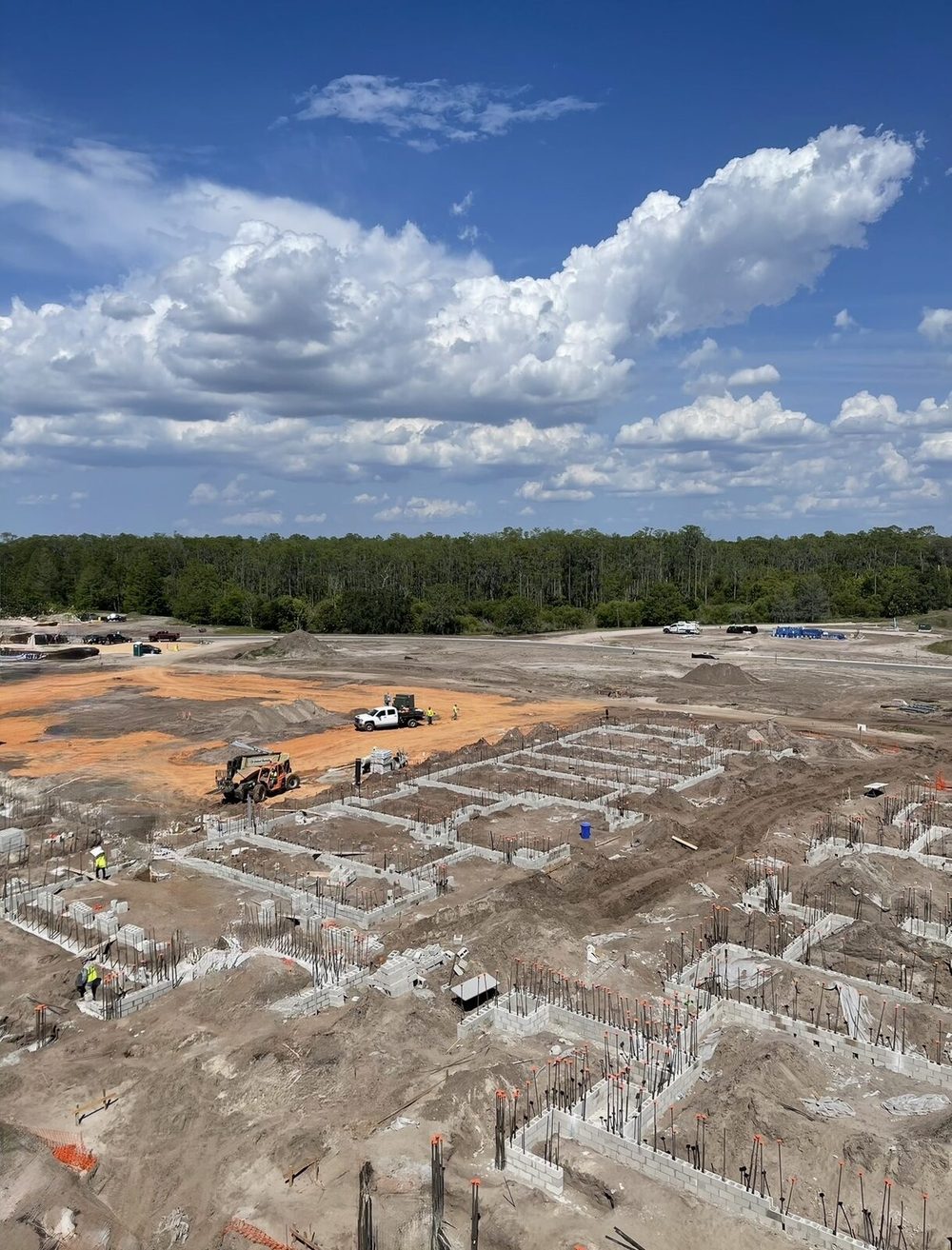
First, the construction pipeline is collapsing. CRE Daily reported apartment units under construction have fallen to about 550,000 from a peak of 1.1 million in early 2023, and the MBA expects starts to keep declining across single family and multifamily. Three years from now, the markets that stopped building today will be short again. Owners and builders who control entitled land through this stretch will be positioned when the cycle turns, because land and entitlement remain the real bottleneck, not capital.
Second, well capitalized buyers with patient equity will get access to recapitalizations and note purchases that did not exist when everyone could refinance. Lenders rolling bridge loans today are not obligated to keep doing it.
What Could Break, and What I Am Watching
The risk is that the bridge market stays open just long enough to make the eventual reckoning bigger. Rialto's Joe Bachkosky told Bisnow forced selling has been limited but becomes more likely the longer rates stay high. Fratantoni also put recession odds over the next 12 months at about 35%. A recession on top of a 5% 10-year would hit apartment operating income and refinancing at the same time.
The other side deserves a fair hearing. Apollo's Torsten Slok argued, per Bisnow, that yields could peak within about a month if an easing of tensions in the Middle East pulls oil lower. If that happens, some of today's bridge borrowers will look smart. I would not underwrite to it.
Here is what I am watching over the next quarter: Green Street's October and November index prints, especially apartments; CLO modification volumes in Fitch's next update; whether the 10-year holds above 5% after the December Fed meeting; and whether debt fund share keeps climbing, which would tell me banks are still stepping back.
If you are carrying floating rate debt on a project or trying to fund a development without leaning on expensive short term money, our free e-book The Capital You Don’t Have to Rent walks through ways to structure funding that do not depend on rates bailing you out.
Sources
- CRE Price Recovery Stalls as Higher Yields Threaten Further Declines, CRE Daily, October 9, 2026
- Bridge-to-Bridge Loans Delay CRE Reckoning as 10-Year Tops 5%, CRE Daily, October 8, 2026
- Apartment Cap Rates Barely Top Treasuries as Debt Passes $40T, CRE Daily, October 8, 2026
- Mortgage Rates Will Remain Above 7% Through 2027, Top Economist Forecasts, Realtor.com News, October 11, 2026