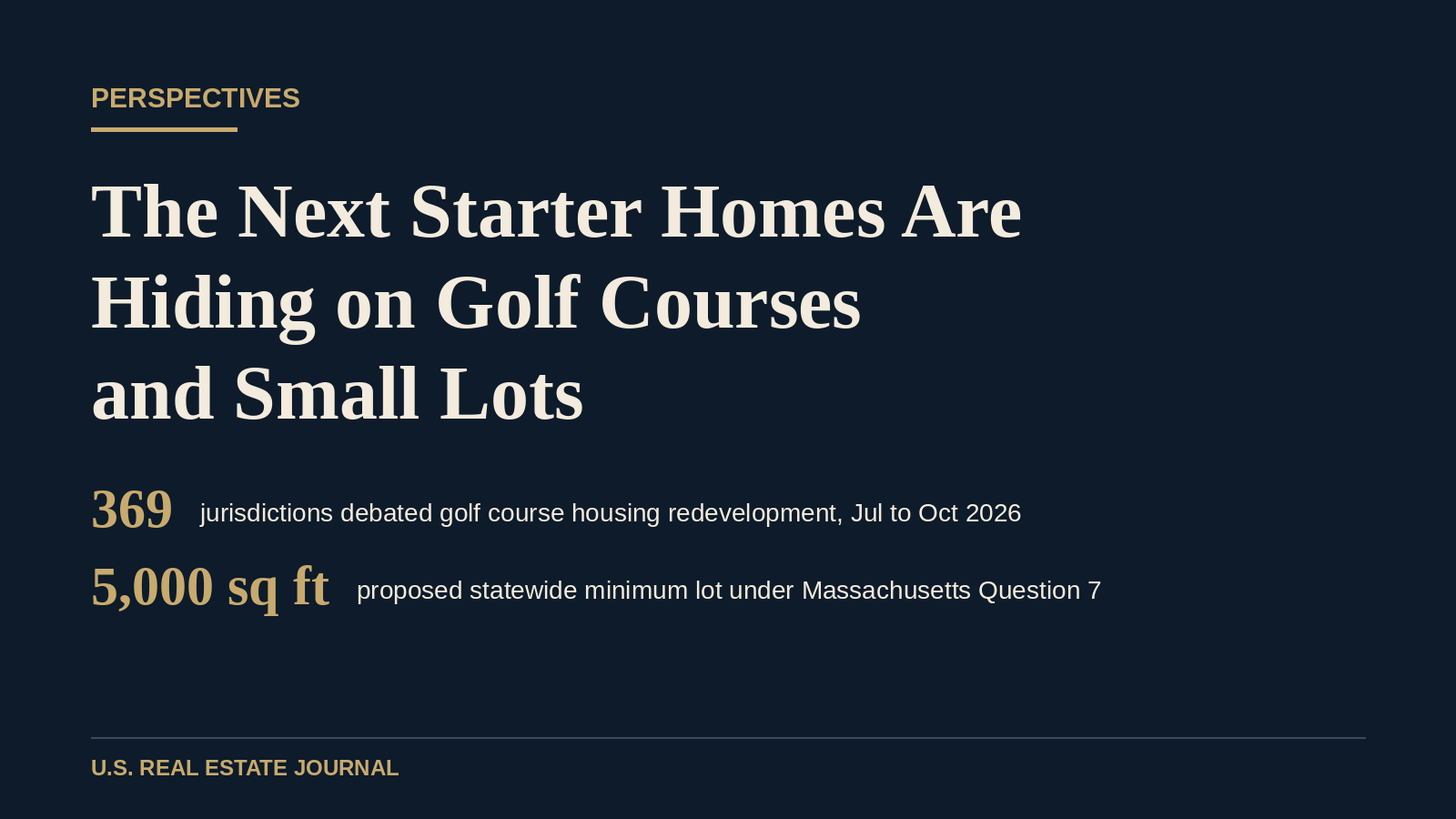

Two stories crossed my desk this week that look unrelated and are really the same story. CRE Daily reported Tuesday that Virginia Beach’s city council voted 9 to 2 to sell Virginia Beach National, a roughly 350 acre city owned golf course, to homebuilder Dragas Companies for $17.9 million. A day later, Realtor.com reported on Massachusetts Question 7, a ballot measure that would let a single family home go on any residentially zoned lot of at least 5,000 square feet with 50 feet of frontage and public sewer and water.
One is a fairway and the other is a backyard. Both are fights over land that already exists, already sits inside built out places, and in most cases already has pipes in the ground. That is where the housing shortage actually lives, and it is why I keep telling people the bottleneck is land and entitlement, not lumber or labor.
The Golf Course Is the New Infill Parcel
CRE Daily’s piece drew on a GatherGov analysis of local meeting transcripts, and the scale surprised me. Between July 2 and October 2, “golf course” came up more than 31,000 times across 9,322 meetings in 2,805 jurisdictions. Housing tied to redevelopment, rezoning, or a sale narrowed that to 369 jurisdictions and 584 meetings, led by Florida, Texas, and Minnesota.
The Virginia Beach numbers explain why cities are listening. According to CRE Daily, the city has roughly $8 million of public money in the course, and development authority staff estimated it returned about $220,000 a year in taxes and operating payments over 19 years. The plan calls for 659 for sale homes, some of them price targeted, a child care facility, and a reconfigured course, with sale proceeds going back into golf. For a city, that turns a subsidized amenity into cash, tax base, and homes. For a builder, it is a large contiguous parcel in a market where large contiguous parcels basically do not exist anymore.
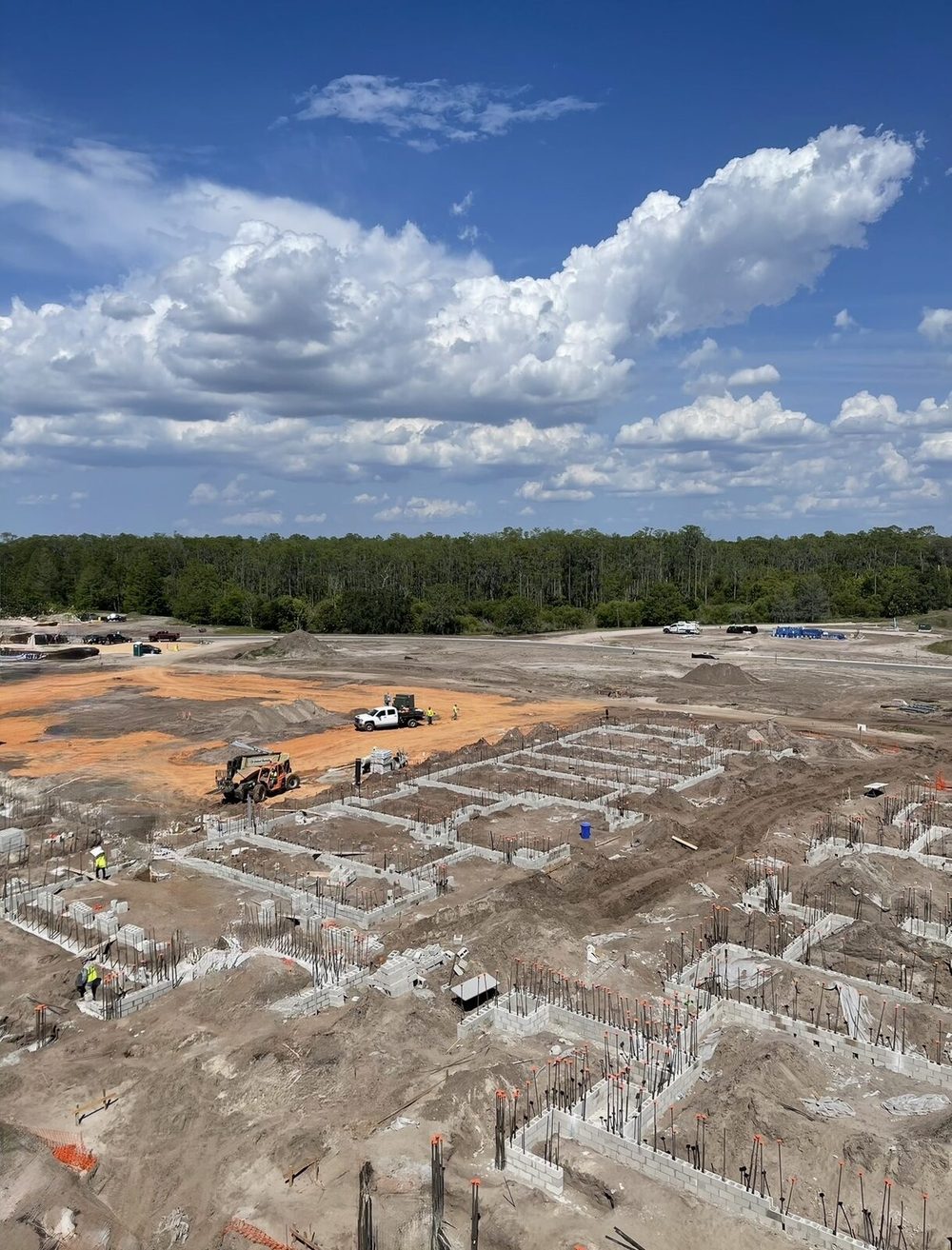
That is the opportunity, and it is real. Golf course land tends to have road access, utilities nearby, and established neighborhoods on three sides, which is exactly what makes the per lot math work when financing is expensive. With the 10 year Treasury closing at about 5.28% on Tuesday, per CRE Daily’s market snapshot, nobody can afford to pay for a new interchange and a sewer extension to reach a greenfield site an hour out.
Where These Deals Break
Here is what the headline misses. The vote was the easy part. CRE Daily notes the Virginia Beach housing still needs rezoning, and a conservation group’s federal lawsuit is pending. In Hollywood, Florida, a proposal to rezone the 166 acre Emerald Hills course drew flooding concerns from residents. In Oregon, Wisconsin, a plan to shrink a course and add homes met a standing room only, mostly opposed crowd. The GatherGov data shows the pattern: open space and conservation language showed up in about half of the meetings, and flooding and stormwater in 14%.
Anyone underwriting these sites should treat stormwater as the real cost line. A golf course is often the neighborhood’s drainage system, whether anyone admits it or not. Take away the turf and the ponds, and the engineering, the detention requirements, and the neighbors’ lawyers all arrive at once. I would want the hydrology study before the purchase contract, not after.
The second risk is timeline. A city land sale with a lawsuit attached and a rezoning still ahead can easily take longer than the capital behind it is willing to wait. The builders positioned to win here are the ones with patient equity and a land basis low enough to carry the parcel through two or three years of hearings.
The cheapest new home in America is the one built on land that already has a road, a water line, and a sewer stub. Everything else is a zoning argument.
Massachusetts Is Testing the Other Lever
Question 7 goes at the same problem from the opposite direction. Instead of one big parcel, it unlocks thousands of small ones by setting a statewide floor on lot size. Realtor.com reported that the Tisch College of Civic Life at Tufts estimates the rule could touch roughly 200,000 parcels but expects only about 750 new homes a year, because most owners will not subdivide and some towns will find other ways to slow things down. Even so, Tufts pegs that as a 15% lift in single family construction in the state. The campaign behind the measure argues the real figure is 2,200 to 5,700 homes a year.
I think the honest answer sits closer to the conservative estimate in the early years and grows over time, the way accessory dwelling unit reforms did in California. Lot splits are a homeowner decision, not a developer decision, and homeowners move slowly. But context matters. Massachusetts estimates it needs 222,000 homes between 2025 and 2035, and it earned an F on Realtor.com’s state housing report card. In a state that short, a few thousand small lot homes a year near existing infrastructure is not a rounding error.
The opposition is the same one Virginia Beach is facing. The Massachusetts Municipal Association argues the measure strips local discretion, and Realtor.com notes that similar starter home pushes in Maryland and Utah stalled over local control. That tension is the whole game. Local control is how communities protect drainage, schools, and character. It is also how they quietly say no to every new household.
What I’m Watching
First, the Virginia Beach rezoning and the lawsuit. If a 659 home plan on public golf land clears both, expect other cities carrying money losing courses to run the same playbook, especially across the Sun Belt, where the Southern Squeeze has pushed starter home prices past what local wages support. Florida and Texas already lead the meeting data.
Second, the November vote in Massachusetts. A win would give other expensive states a template that does not depend on a governor muscling a bill past local opposition.
Third, who ends up building. Small lot infill favors local builders who can run five homes at a time on thin overhead, and golf course redevelopment favors well capitalized builders who can sit through hearings. The middle, a regional builder that needs 200 lots now and cannot wait, gets squeezed by both.
The common thread is simple. We do not have a shortage of land in this country. We have a shortage of land that is allowed to become housing, and every one of these fights is about moving that line.
If you are tracking which metros have land that can actually be entitled and built on, our free National Land Opportunity Watchlist and market pulse at Land Briefing are a good place to start, along with the scoring methodology behind them.
Sources
- Golf Course Redevelopment Becomes a Local Housing Fight, CRE Daily, October 7, 2026
- Massachusetts Ballot Question Would Legalize Smaller Lots for Starter Homes, Realtor.com, October 8, 2026
- Apartment Demand Catches Up to a Fading Supply Wave, CRE Daily, October 8, 2026