
Two stories from the last 48 hours read like they come from different states. They come from the same one, and together they are the clearest picture I have seen of what happens when a market actually builds enough housing, just at the wrong interest rate.
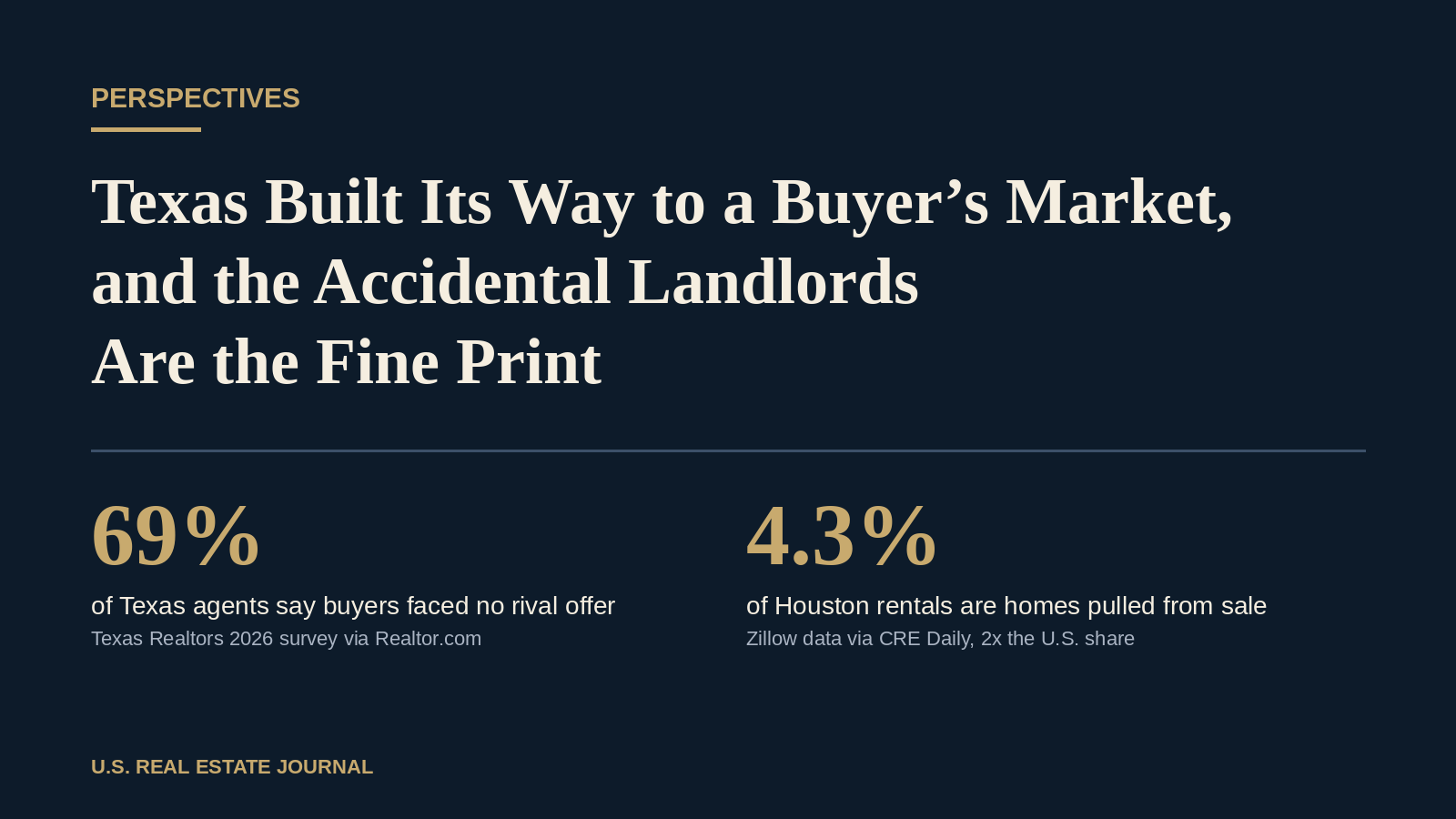
Realtor.com reported Tuesday on the 2026 Texas Homebuying Experience Report from Texas Realtors. Sixty-nine percent of agents surveyed said their buyers did not compete against a single other offer this year, up from 57% in last year’s report. The share saying buyers felt they had many homes to choose from rose to 32% from 25%. Realtor.com’s own Market Hotness Index now classifies Texas as a cool buyer’s market, with a statewide median listing price of $359,990, down 2.4% from a year ago, and a median of 64 days on market.
A day earlier, CRE Daily’s Texas newsletter, drawing on Zillow data reported by the Houston Chronicle, said Houston leads the country in accidental landlords. About 4.3% of the metro’s single-family rental listings are homes whose owners gave up trying to sell within the prior three months. That is triple the rate of three years ago and more than double the 2.0% national share.
Buyers have leverage, sellers are stuck and renters have more choice than in years. The operator question is who is on the right side of that.
Supply Did What Supply Is Supposed to Do
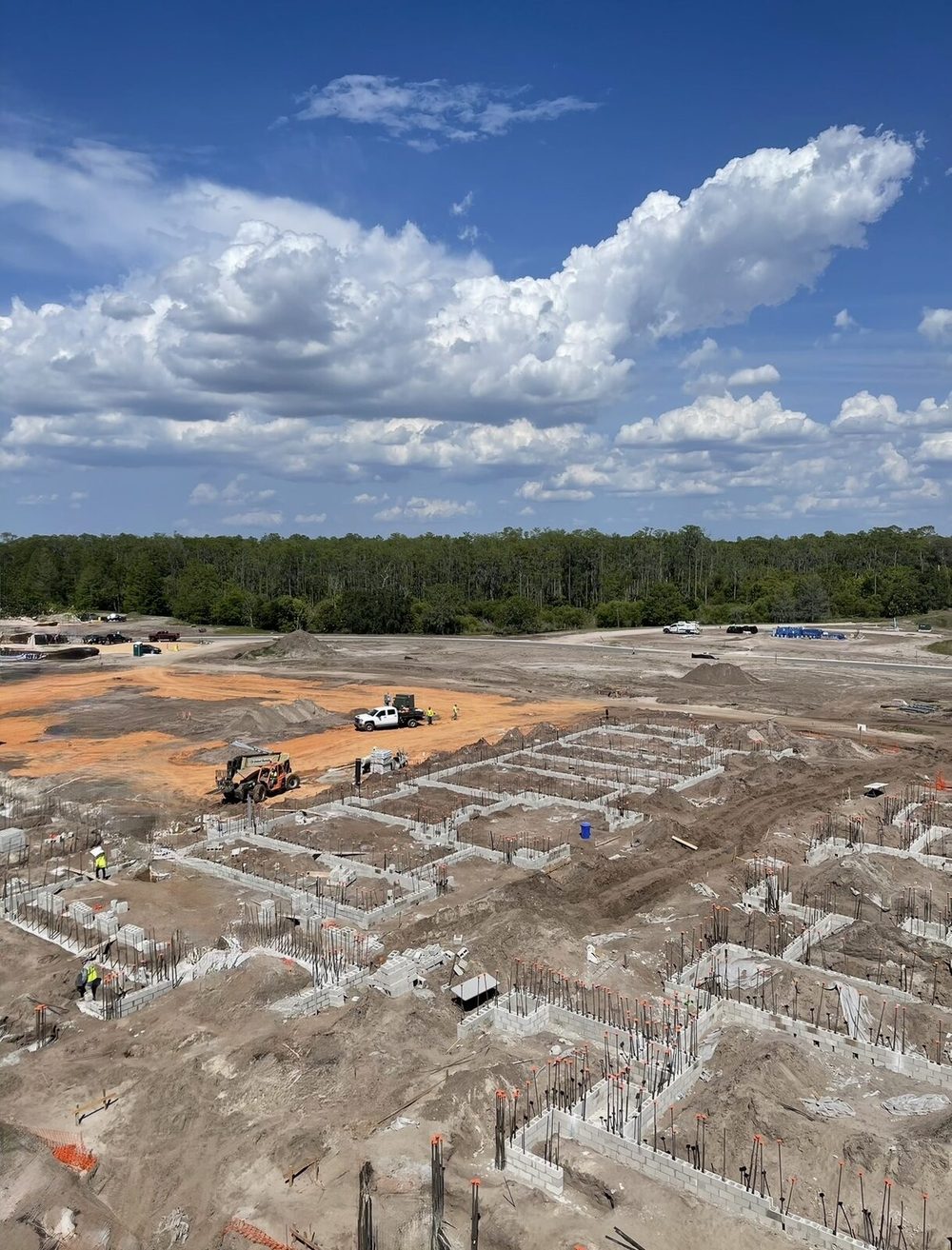
Texas deserves its due first. A San Antonio brokerage owner quoted by Realtor.com made the point plainly: the state kept building through the rate cycle, so when relocation demand and investor buying faded at the same time, the new product was still coming out of the ground.
The survey backs that up. Among buyers who paused their search, only 6% said it was because too few homes were available. Thirty-four percent said the homes were too expensive. That is a different problem from the Northeast, where the NAR data Realtor.com covered Tuesday shows the affordability index falling 4.5% as supply stays tight. In the South, it slipped just 0.4%. Texas has largely solved the quantity problem, not the price problem.
Nationally, the picture is drifting toward Texas. NAR counted 1.60 million homes for sale in September, 4.8 months of supply and the most since November 2019, while Freddie Mac’s 30-year average reached 7.40% as of October 8. Texas just got there first.
The Bill Lands on the 2022 Buyer
The accidental landlord in Houston is mostly not an investor who chose to hold. CRE Daily describes owners who bought after rates started climbing in mid 2022 and now lack the equity to sell. One agent in Spring said a client would have had to bring $15,000 to $20,000 to closing just to get out.
So they rent the house instead, and they walk into one of the most crowded single-family rental markets they could have picked. According to John Burns Research figures cited by CRE Daily, Houston’s for-lease inventory of houses, townhomes and condos rose 80% over three years to roughly 16,660 listings in September. Build-to-rent communities in the metro have grown to 16,225 homes from 2,931 less than a decade ago. Average single-family rent sits around $2,054, essentially flat on the year, and homes that once leased in weeks can now sit for up to 60 days.
A household with a 2023 mortgage near 7%, Texas property taxes and insurance, and a rent that has not moved is very likely carrying negative monthly cash flow before vacancy, turnover and the repairs a professional build-to-rent operator spreads across hundreds of doors. Their staying power depends on job stability and patience.
A homeowner who cannot sell and cannot cover the payment with rent is not a landlord. That is deferred inventory with a timer on it.
This is the K shaped housing economy inside a single metro. The 2019 or 2020 owner with a 3% loan and real equity is fine. The 2022 to 2024 buyer who stretched into a new subdivision is absorbing the correction, quietly, one lease at a time.
Where I See Opportunity
For first-time and workforce buyers in Texas, this is the best negotiating window in years. The San Antonio broker Realtor.com interviewed described zero down VA offers with seller concessions getting accepted on the first try, the kind of offer that would not have been taken seriously in 2021. Buyers who can carry today’s payment are getting concessions and rate buydowns, which can be worth more than waiting for a quarter point of relief.
For well capitalized single-family rental operators, the accidental landlord is a future seller. When those owners tire of feeding the house each month, many will sell near their loan balance to someone with cash or patient debt.
For builders, the lesson is about land basis. Production builders holding lots bought before the run up can still fund rate buydowns and clear inventory. The ones who paid peak prices for land in 2022 have far less room, and that is where I expect margin pressure first.
Where It Breaks Down
I would not read a buyer’s market as a bottom. Rates are the swing factor, and they are moving the wrong way. CRE Daily reported Tuesday that PIMCO’s chief investment officer sees a path for the 10-year Treasury to approach 6%, with the yield closing near 5.24% on October 12. If mortgages follow, buyer leverage on price gets eaten by payment, and the pool of qualified buyers shrinks just as more accidental landlords decide to sell.
The second risk is concentration. New subdivisions with heavy 2022 to 2024 sales, thin equity and large build-to-rent pipelines nearby are where forced sales and rent competition stack up. The Southern Squeeze was an affordability story on the way up. On the way down, it becomes an equity story, and it lands hardest in the newest neighborhoods on the edge of town.
What I Am Watching
Three things: whether Houston’s share of rentals born from failed sales keeps climbing into winter, whether Texas days on market push meaningfully past the national level, and whether build-to-rent starts in Houston and San Antonio slow in response to flat rents. If all three move the wrong way together, the overhang turns into distressed supply. If rates ease instead, Texas is set up for the cleanest recovery in the country, because it did the hard part and built the houses.
If you are tracking which metros still have the land, job growth and entitlement runway to absorb new supply, the free National Land Opportunity Watchlist and market pulse at Land Briefing is a good place to start.
Sources
- Bidding Wars Fade Across Texas as Most Buyers Face Zero Opponents, Realtor.com News, October 13, 2026
- Houston Leads the Nation in Accidental Landlords as Listings Pile Up, CRE Daily, October 12, 2026
- Home Sales Rise Unexpectedly in September in Defiance of Surging Mortgage Rates, Realtor.com News, October 13, 2026
- PIMCO Warns the 10-Year Treasury Yield Could Still Climb Toward 6%, CRE Daily, October 13, 2026