
The October Consumer Price Index landed Tuesday morning, and it ran hotter than the market wanted. Headline CPI rose 0.4% for the month, and core CPI, which strips out food and energy, rose 0.3% for the third month in a row, according to the Bureau of Labor Statistics. Economists polled by Dow Jones had expected 0.3% on the headline and 0.2% on core, CNBC reported.
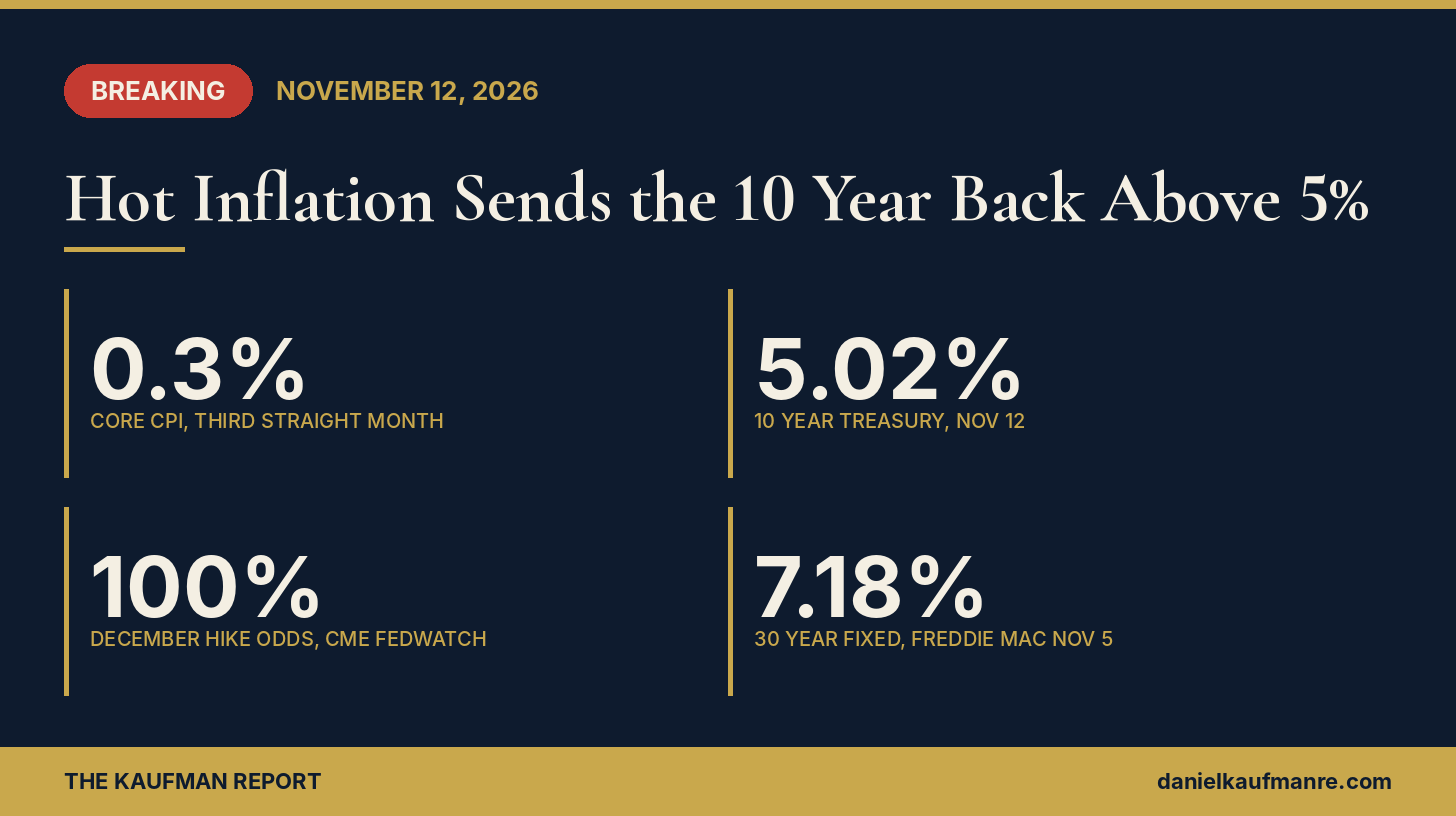
Hours before the release, Fed Governor Christopher Waller said that if core came in at 0.3% or higher, a half point hike should be on the table at the December 8 to 9 meeting. Core came in at 0.3%. By Thursday the 10 year Treasury was back above 5%, and traders were pricing a December hike as a certainty.
The numbers that matter this week
- Headline CPI: up 0.4% in October, after 0.6% in September
- Core CPI: up 0.3%, the third straight month at that pace
- Shelter: up 0.3%, more than thirty percent of the monthly increase
- 10 year Treasury: 5.02% Thursday, after touching 5.0583% intraday, per CNBC
- 2 year Treasury: its biggest one day jump since April 2025 on Tuesday, per CNN
- December odds: 100% priced for a hike Thursday per CME FedWatch, with about a 13% chance of a half point
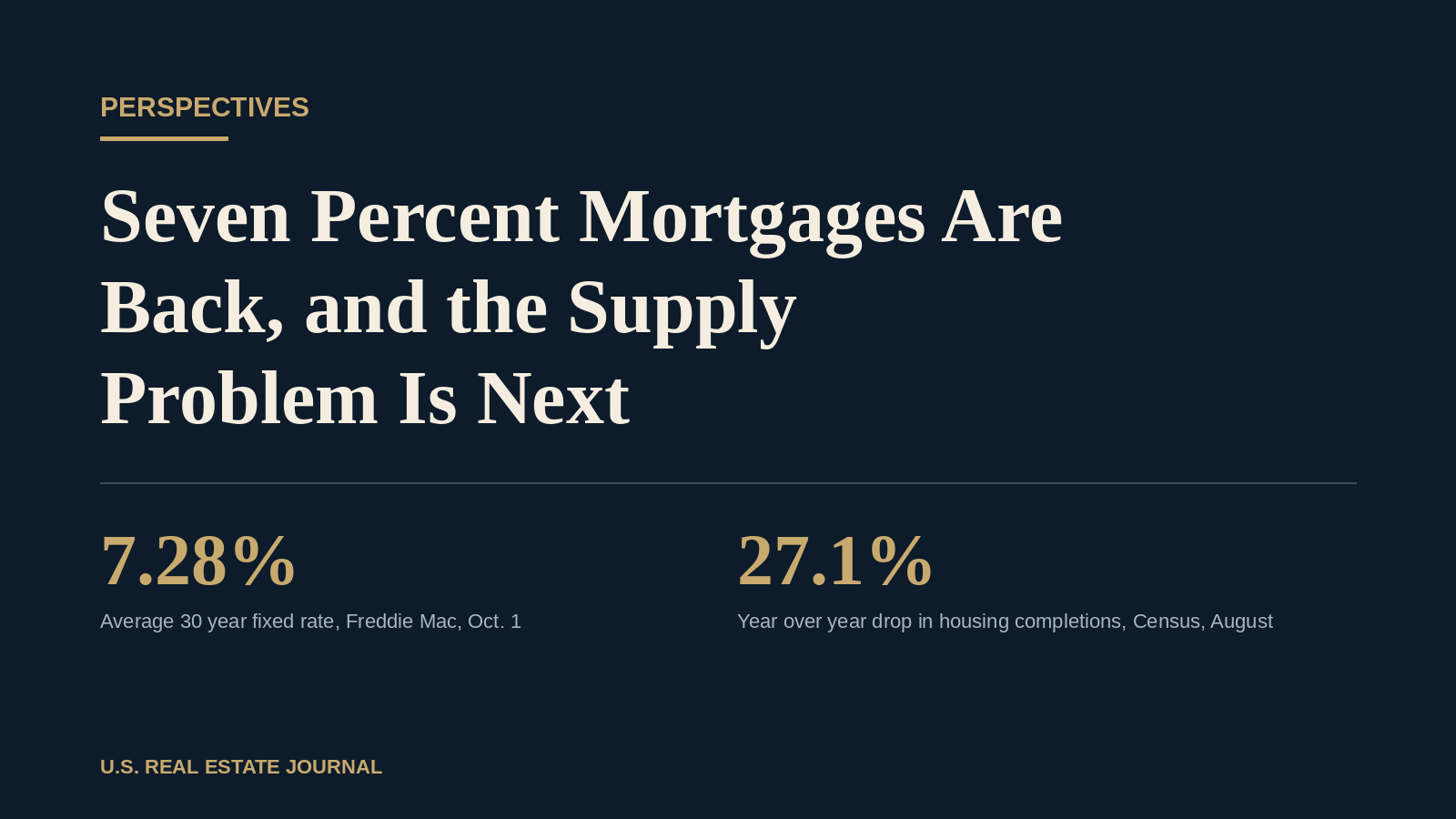
- 30 year fixed: 7.18% as of November 5 per Freddie Mac, its third straight weekly decline, with this week’s survey due at noon today
The Fed is telling us where this goes
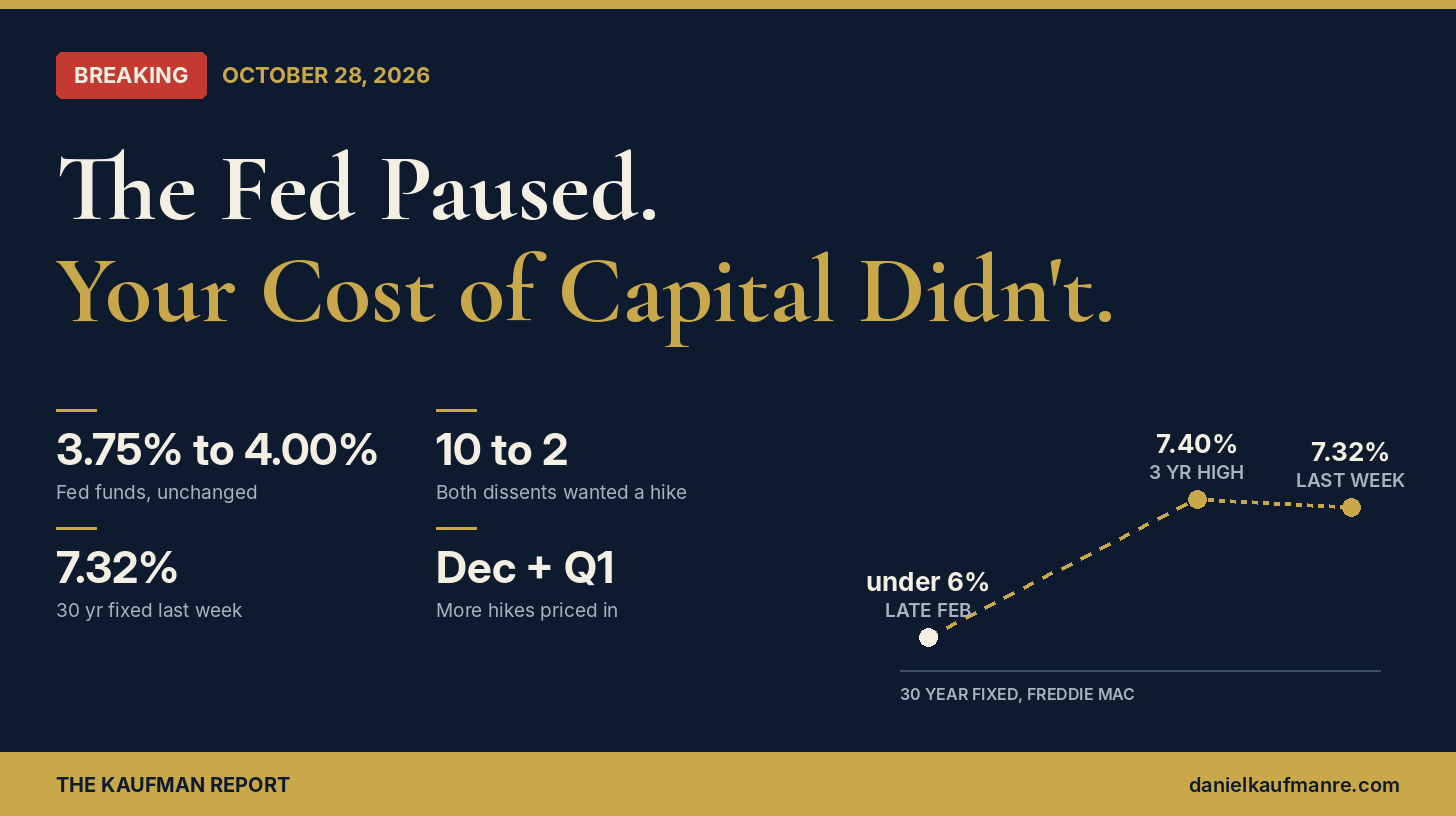
The policy rate sits at 3.75% to 4.00% after the September hike and the October hold. Dallas Fed President Lorie Logan said Tuesday she wants at least another half point of increases before the Fed pauses, and that the current rate is too low and adding to inflation pressure, Reuters reported. Waller framed a quarter point as the risky choice, saying it “would put our credibility at risk.”
The market heard it. CNN reported that a week earlier traders saw a 23% chance the Fed would hold in December. That option is gone. Goldman Sachs added another quarter point hike for March to its forecast on Wednesday, according to CNBC.
When the Fed starts debating the size of the hike instead of whether to hike, the cost of capital is still heading up.
The trend behind the print
This is not one bad month. Core has run at 0.3% for August, September, and October. Energy cooled in October after a 5.2% jump in September, but oil is still well above its level before the war with Iran, and Brent was back near $93.60 Thursday. Shelter, the biggest single piece of the index, is still rising every month.
The 10 year hit 24 year highs in October, CNBC noted, and a soft 10 year auction on Tuesday showed that buyers of long duration paper want more yield to hold it. That is the rate that sets mortgages and long term property debt, not the overnight rate.
What it means for investors
Price the exit at today’s rates. A 5% 10 year puts a floor under cap rates. Any plan that needs cap rates to compress next year is depending on a bond rally the data is not supporting.
Floating rate exposure is the pressure point. Anything tied to SOFR or prime moves with fed funds, and the market now expects at least one more hike, possibly more by mid 2027. Rate caps and hedges get more expensive as those odds climb.
Sellers will show up. Owners who planned to refinance into lower rates are running out of time. Patient buyers with certainty of close will see motivated sellers, especially on land and stalled projects.
Rental demand stays firm. Mortgage rates above 7% keep households renting longer. Workforce rentals near real employment hold occupancy in this kind of market.
What it means for developers
Carry costs go up again in December. Construction debt prices off short rates. Every month a project sits between entitlement and vertical is a month of higher carry. Speed through entitlements is worth real money right now.
Costs are still climbing. Energy, insurance, and services are all in this report. Hold contingency, lock pricing where you can, and do not assume material and labor costs flatten.
Build for the buyer who exists. Buyers are qualifying at 7% plus. Attainable, right sized product near jobs is where homes are still selling. That is why we keep Haven, our attainable and workforce housing brand, at the center of how we plan new communities.
Land basis is the margin. Many land sellers still price as if rates are heading back to 6%. They are not, at least not soon. Buy the dirt at a basis that works at today’s rates and let time work for you instead of against you.
What I am watching next
- The October producer price index on Friday
- The November jobs report and the November CPI on December 10
- The December 8 to 9 FOMC meeting, and whether the hike is a quarter or a half
- The 10 year Treasury around 5% and oil prices tied to the Iran war
- Freddie Mac’s weekly mortgage rate survey every Thursday
Bottom line
October confirmed what the Fed has been telling us since September: the tightening cycle is not over, and the bond market is pricing more of it. Plan every project for a 5% 10 year and a higher policy rate in December. The developers who buy basis, move fast through entitlements, and build product people can afford will be the ones still standing when this cycle turns.
To track land and housing fundamentals market by market, use LandBriefing. If you want a second set of eyes on a site before you commit, the Site and Feasibility Review at Kaufman Real Estate and Consulting is where we work through those decisions.
Sources
- Consumer Price Index, October 2026, U.S. Bureau of Labor Statistics, November 10, 2026
- Treasury yields: Traders digest inflation data, Waller comments, CNBC, November 10, 2026
- Bond yields surge most in 19 months as traders brace for Fed rate hikes, CNN Business, November 10, 2026
- Fed officials open door to a quicker round of rate hikes as inflation worsens, Howard Schneider and Ann Saphir, Reuters via Yahoo Finance, November 10, 2026
- 10 year Treasury yield jumps back above 5% as oil gains and more Fed rate hikes expected, CNBC, November 12, 2026
- Primary Mortgage Market Survey, Freddie Mac, November 5, 2026