I still work shifts in the emergency department. People sometimes assume that’s a hobby I’ve kept out of sentimentality now that I run a real estate platform. It isn’t. It’s the best market research I have access to, and it has shaped how I underwrite workforce housing more than any real estate course or REIT quarterly earnings call ever has.
Housing instability doesn’t announce itself in an ER. Nobody arrives with a chief complaint of “my rent is unaffordable.” It shows up as delayed care for a chronic condition because a patient prioritized rent over a prescription co-pay. It shows up as a pediatric asthma exacerbation from mold in a unit a landlord won’t remediate. It shows up as the exhaustion of a patient working two jobs to cover a rent increase, whose blood pressure has crept up over eighteen months of visits because stable housing, genuinely stable, not just currently-not-homeless, is protective in ways the medical literature increasingly makes explicit and policy still treats as a footnote.
Why that matters for underwriting
My prior role overseeing a $16 billion real estate portfolio for Providence St. Joseph Health put those two worlds in the same room formally: a major health system that had concluded, correctly, that housing is a upstream determinant of health outcomes expensive enough to justify direct investment. What I took from that into Oldivai wasn’t a mission statement. It was a specific underwriting insight: the workforce housing that performs best over a hold period isn’t necessarily the cheapest to build or the highest cap rate at acquisition. It’s the housing that actually keeps working families stably housed long enough that turnover, the single biggest driver of multifamily operating cost, comes down.
We underwrite retention the way a hospital underwrites readmission risk: as a cost center directly tied to the quality of what you’re providing, not a separate line item unrelated to the physical product. A unit with a maintenance response time measured in days instead of hours generates a support ticket that, in a resident’s life, competes for attention with the same stack of stressors I see in the ER, and eventually shows up as a move-out, which is far more expensive than the maintenance call would have been.
Nobody comes to the emergency department because their housing is stable. But housing instability walks in constantly, wearing other symptoms.
The “missing middle” from the exam room
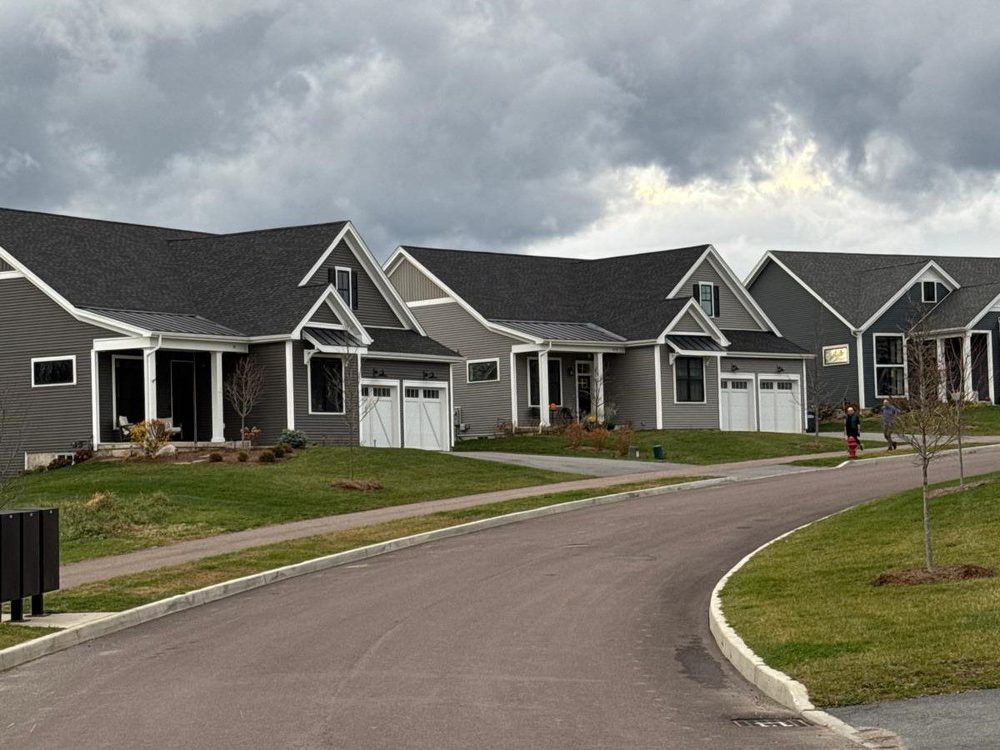
The patients I’m describing are overwhelmingly not the households captured by traditional affordable housing programs, which are means-tested well below what a full-time nurse, teacher, or two-income working family actually earns. They’re also priced out of most new market-rate supply. That gap, between subsidized affordable housing and market-rate new construction, is where Oldivai and, increasingly, the Kaufman & Company platform we work alongside, deliberately build.
I don’t think every real estate operator needs to work ER shifts to underwrite this segment well. But I’d encourage more of them to spend time with the actual households they’re housing, in whatever form that takes, before finalizing a pro forma. The data eventually catches up to what you’d see firsthand a lot faster.